Next: Index Up: Introduction to Exercises in Previous: Stokes'theorem Contents Index
 |
 |
 |
|
|
 |
 |
|
 |
|
|
 |
 . Thus,

 .
.
Exercise Answer1.2
|
|
 |
|
|
 |
 . Thus,

 .
.
(2) The unit vector  with the direction of
 is
is

Exercise Answer1.3
![$\displaystyle {}^t[1\ 2\ 1] \times {}^t[2\ -1\ -2]$](img295.png) |
|
 |
|
|
 |

 |
|
 |
|
|
 |
(1) The area of parallelogram is


Exercise Answer1.5
1.
 .Thus they are not coplanar.
 |
|
 |
|
|
 |


 |
|
 |
|
|
 |
||
|
 |
||
|
 |
Exercise Answer2.1
1. The components of
 are
are
 . Then
 and the trace of
,
and the trace of
,
 is on the paraboloid
.
is on the paraboloid
.
2. Differentiate eachcomponents, we have

3.
 .
.
   |
|
   |
|
|
 |
||
|
 |
 |
|
  |
|
|
 |
||
|
 |
||
|
 |
4. Let
 . Then
 .
Thus, by the derivative of the vector function, we have
.
Thus, by the derivative of the vector function, we have
 and
and
 are orthogonal.


Exercise Answer2.2
1. The straight line to be found has a starting point of  and a direction of
![${}^t [1,4,3]-{}^t [-1,0,2] = {}^t [2,4,1]$](img345.png) . Let the arbitrary point on the line as
. Let the arbitrary point on the line as  . Then,

 , we have

3. The straight line to be found has a starting point of and a direction of
. Let the arbitrary point on the line as . Then,
, we have
4. Since
 ,we have
 . Thus,
 is a smooth curve that spirally rotates around a cylinder with a radius of 1.


 ,
,
 |
|
 |
|
 |
|
 |


 .
Here we will consider a method that is easy to calculate.
.
Here we will consider a method that is easy to calculate.


Other way is


 implies

 implies


Exercise Answer3.1
1. Let the level surface through the point
 be
be
 on this level surface be

 . Thus differentiate both sides by .


 . Also, ,
the normal vector is given by
. Also, ,
the normal vector is given by  . Thus


Next, find the directional unit vector to find the directional derivative in the  direction at the point
  .
.
 .Then the directional derivative is

Also, the equation of the tangent plane is
 that is
3. Let
 be a streamline equation. Then
 expresses the normal vector of
.
expresses the normal vector of
.

 .Note that the slope of the tangent line of
is
.Note that the slope of the tangent line of
is
 implies

 .Thus
.Thus
 and
Next differentiate the equation 5.1 with respect to
and
Next differentiate the equation 5.1 with respect to  . Then
 implies

 |
|
 |
|
 |
|
 |
|
 |
|
 |
 .
Thus,
.
Thus,
 is a conservative field.
 .
.

 |
|
 |
|
|
 |
||
|
 |


 , we have

7. Note that
 of
of
 is orthogonal to
 .Therefore the unit normal vector
is
.Therefore the unit normal vector
is

 implies

 |
|
 |
|
 |
|
 |
|
 |
|
 |
 ,
,
 . Thus,

Exercise Answer3.2

 implies,

 |
|
 |
|
 |
 |
 is
is

 |
|
 |
|
|
 |
 and the vector field
has a potential
and the vector field
has a potential
 . Therefore, the potential energy at P is
 .
.
3. Use

, we have
4. Note that
of
is orthogonal to
.Therefore the unit normal vector
is
implies
|
|
|
|
|
|
|
|
|
|
|
,
. Thus,
6.
 |
|
 |
|
|
 |
||
 |
|
 |
|
|
 |
 |
|
 |
|
|
 |
||
 |
|
 |
|
|
 |
Exercise Answer3.3

 .
Therefore,
.
Therefore,
 |
|
 |
|
|
![$\displaystyle \int_{1}^{2} (12t^5 + 10t^4 + 12t^3 + 30t^2 )dt = \left[2t^6 + 2t^5 + 3t^4 + 10t^3\right]_{1}^{2}$](img477.png) |
||
|
 |
2.

 .Therefore,
 |
|
 |
|
|
![$\displaystyle \int_{0}^{1}(8t^{10}\boldsymbol{i} + 8t^{9}\boldsymbol{j} + 12t^{...
...bol{i} + \frac{8}{10}t^{10}\boldsymbol{j} + t^{12}\boldsymbol{k}\right]_{0}^{1}$](img484.png) |
||
|
 |
 .Therefore,
 |
|
 |
|
|
![$\displaystyle \left[(-\frac{t^6}{2} - \frac{2t^5}{5})\boldsymbol{i} - \frac{4t^6}{6}\boldsymbol{j} + (t^4 + \frac{2t^5}{5})\boldsymbol{k}\right]_{0}^{1}$](img489.png) |
||
|
 |
3. Note that if  satisfies
 ,then has a scalar potential and
 . Thus we find
  so that,
 .
.

 .Therefore,

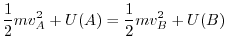
4. The force field
 has a potential
  . Then
 .This suggest that the equation of motion of this mass point is

 .Then
.Then


 .
.


 constant
5.
If the origin O is centered on this  plane and the circle with radius
  is
is  , the equation of motion of the mass point is parametrized by
 .Thus,


![$\displaystyle \int_{C} \boldsymbol{F} \cdot d \boldsymbol{r} = \int_{0}^{2\pi} [48 - 30\sin{t}\cos{t}]dt = 96\pi$](img514.png)
 |
|
 |
|
|
 |
||
|
![$\displaystyle \int_{0}^{2} x^2 x^2 dx + \int_{0}^{2}(x + x^2)(2xdx) = \left[\fr...
...} + \left[\frac{2}{3}x^{3} + \frac{2}{4}x^{4} \right ]_{0}^{2} = \frac{296}{15}$](img518.png) |
8. The directional derivative of at P in the direction of is,

 |
|
 |
|
|
 |

Exercise Answer3.4
1.
(1) When the curved surface  is projected onto the plane, maps to
 . Also,from the surface
 , if the corresponding
 is the position vector,
 which is
 ,
,

 . Then
 |
|
 |
|
|
 |
||
|
![$\displaystyle 3\int_{0}^{1}\left[(x-1)^2y\right]_{0}^{1-x}dx = 3\int_{0}^{1}(1-x)^3\;dx = -3\left[\frac{1}{4}(1-x)^{4}\right]_{0}^{1} = \frac{3}{4}$](img534.png) |

 |
|
 |
|
|
![$\displaystyle \int_{0}^{1}\int_{0}^{1-x}(2x^2 - 2x - 2y + 2)dy dx = \int_{0}^{1}\left[2x^2 y - 2xy -y^2 + 2y\right]_{0}^{1-x}dx$](img540.png) |
||
|
 |
||
|
 |
||
|
![$\displaystyle \int_{0}^{1}(-2x^3 +3x^2 - 2x + 1)dx = \left[-\frac{x^4}{2} + x^3 - x^2 + x\right]_{0}^{1}$](img543.png) |
||
|
 |
2. Since the surface is region on the plane,the unit normal vector is
 .
.
 is on the plane. Then
 ,
, .Here,
 is a disk, so we use the polar coordinates, then
 and
and
 |
|
 |
|
|
![$\displaystyle \int_{0}^{\pi/2}\left[\frac{r^3}{3}\right]_{0}^{a}\left((\cos{\theta} - \sin{\theta})\boldsymbol{i} - \cos{\theta}\boldsymbol{j}\right)d\theta$](img553.png) |
||
|
 |
3. By projecting onto plane, then aps to
 .
Next by letting
.
Next by letting  be a position vector
 .
Thus,the normal vector of the surface is
.
Thus,the normal vector of the surface is
 .
Therefore,,
.
Therefore,,
 using vertical simple, we have,

4. By projecting the surface onto  plane, maps to
 .
Next,let be a postion vector
.
Next,let be a postion vector
 .
Thus,the normal vector of is
.
Thus,the normal vector of is
 .
.
 |
|
 |
|
|
 |
 using the vertical simple,
5. The position vector is
 . Then

 . Then
 implies
 |
|
![$\displaystyle \int_{0}^{2\pi} \int_{0}^{2}(4 - r^2 + 2r^2 \sin^{2}{\theta})r dr...
...eft[2r^2 - \frac{r^2}{4} + \frac{r^4}{2}\sin^{2}\theta \right ]_{0}^{2} d\theta$](img574.png) |
|
|
 |
6. Let
be the position vector corresponds to
 . Then
 of .
of .
 |
|
 |
|
|
 |

 . Then
 |
|
 |
|
|
 |
||
|
 |
8. Since
 ,for
,for  ,the position vector is
 . Thus,

 , the position vector is
 . Here the positive direction is from the bck of the plane to the front of DEFG. Thus, the unit normal vector is
 plane is
 . Then,
![$\displaystyle \iint_{DEFG}\boldsymbol{F}\cdot\boldsymbol{n}dS = \int_{0}^{1}\in...
...;dz = \int_{0}^{1}(2-z)dx = \left[2z - \frac{z^2}{2}\right]_{0}^1 = \frac{3}{2}$](img594.png)
For the plane ABCO: since  , the position vector is
 . Here,the positive direction is the direction of the back of plane ABCO to the front.Thus,the unit normal vector is
 plane is
. Then
plane is
. Then
![$\displaystyle \iint_{ABCO}\boldsymbol{F}\cdot\boldsymbol{n}dS = \int_{0}^{1}\in...
...y=0}^{1}\;dz = \int_{0}^{1}zdx = \left[\frac{z^2}{2}\right]_{0}^1 = \frac{1}{2}$](img598.png)
For the plane ABEF: since  , the position vector is
 . Here the positive direction is the direction of the back of the plane ABEF to the front. Thus, the unit normla vector is

 plane is
 . Then


 . Also,
 . Therefore,


 ,then
,then
 and it is separable.Thus,
 and integrate both sides, we have
 . Thus,
 .
and
.
and
 .Therefore,
 .
Exercise Answer3.5
Basic formula Let
.
Exercise Answer3.5
Basic formula Let
 . Then (1)

1.

 |
|
 |
|
|
 |

2.

 |
|
 |
|
|
 |


4.
 |
|
 |
|
|
 |
 |
(3) (2) implies,
 . By symmetry
 . Therefore,
 |

 .Here using
 ,
,
 . Then
 .Finally,
 implies
 . Then
  .Thus,
 . Now by the initial value
 , we have
  and
and  .
.

 |
|
 |
|
|
 |
||
|
 |

8. Differentiation of composite function implies

 |
|
 |
|
|
 |


(2) By the differentiation of composite functions,,


Exercise Answer3.6
1.

 |
|
 |
|
|
 |
||
|
 |
||
|
 |
 |
|
 |
 |
|
 |

 |
|
 |
|
|
 |
||
|
 |
||
|
![$\displaystyle \boldsymbol{B}\cdot(\boldsymbol{i} \times \frac{\partial \boldsym...
...\frac{\partial \boldsymbol{A}}{\partial z})\ \hskip 1cm ([A\ B\ C] = [C\ A\ B])$](img687.png) |
||
 |
 |
||
|
 |


 implies

 |
|
 |
|
|
 |
||
|
 |
||
|
 |
||
|
 |
 |
|
 |
|
|
 is constant vector) is constant vector) |
||
|
 |
||
|
 |
||
|
 |
 |
|
 |
|
|
 |



Note that there exits so that
 implies
 .
.


 implies
 .Now partially differentiate by ,


 .Thus,
 .
Here partially differentiate
.
Here partially differentiate
 by
by  ,
,


 and
and

8. Since
is conservative, there exists  so that
 .Now we find
 . Then


 has a scalar potential, we find the scalar potential.

 .Note that

 |
|
 |
|
|
![$\displaystyle \int_{{\rm P}}^{{\rm Q}}(-d \phi) = -\phi]_{P}^{Q} = (x^2 + xyz)]_{P}^{Q} = 4-6 - 1 = -3$](img745.png) |
Exercise Answer4.1
1.
(1) Gauss's divergence theorem implies


(2) Tranform
 into the surface integral.Using any constant vetor
 and the triple scalar product,
 |
|
 |
|
|
 |
is a constant vector implies

(3) Gauss's dievergence theorem implies
 |
|
 |
|
|
 |
||
|
 |
(4) Transfrom
 into surface integral.Using a constant vector
,
into surface integral.Using a constant vector
,
 |
|
 |
|
|
 |

(5) Transform
 into surface integral.Using a constant vector
and the triple scalar product,
into surface integral.Using a constant vector
and the triple scalar product,
 |
|
 |
|
|
 |
||
|
 |
(6) Transform
 into surface integral.Using a constant vector
, we have
into surface integral.Using a constant vector
, we have
 |
|
 |
|
|
 |
||
|
 |

 |
|
 |
|
|
 |

2. Using
,we write into surfacee integral.
 |
|
 |
|
|
 |
 .
.

3. Let be the boundary of the curved surface , and let  and
and  be the curved surfaces separated by the boundary. Also,let the unit normal vector of be
 ,the unt normal vector of be
 .Then let the unit normal vector of the surface be
. We have
.Then let the unit normal vector of the surface be
. We have
 or
or
 .Here, ,


4.
(1) Gauss's divergence theorem implies

 .
.

(2) Gauss's divergence theorem implies

 .Thus,

(3) Gauss's divergence theorem implies


(4) Gauss's divergence theorem implies

 implies


5.
(1)
labelenshu:4-1-5-1
 is the directional derivative of the direction of unit normal vector
implies
is the directional derivative of the direction of unit normal vector
implies
 .Thus,


 implies

(2)
is the directional derivative of the direction of unit normal vector implies
.Thus,


 implies

(3) The result of (1) subtracts the result of (2). Then,

(4) is harmonic function means that
 .Therefore,using (2),

(5)
 are harmonic functions means that
 .Therefore,using (3),

(6) is harmonic function. Then (4)implies
 on . Then
 and
and
 .Thus,
 . Hence,
 .Therefore,は定数.
6. If
 ,then Gauss's divergence theorem implies

 . The theorem 3.4 implies has a vector potential.
7.
 .Here, using a constant vector
  , rewrite into surface integral.


 and has a scalar potential.


 is an upper sphere with the radius . Then by the spherical coordinate transformation
 , we have
 |
|
 |
 |
|
 |
|
|
 |
Since
 ,projection onto plane, implies
 . Here,we consier
  and
and  .
.
 |
|
 |
|
|
 |
Next projection onto plane. Then  implies
 .Thus,for
  and
and  ,
,
 |
|
 |
plane. Then implies
 .
.
 |
|
 |
|
|
 |
 .First projection onto, plane. maps to
 .
.
 plane, maps to
 .,
.,
 plane, maps to
 .
.

Adding these,
 |
|
 |
|
|
 |
Here using the polar coorinates,we have
. Thus
|
|
 |
|
|
 |
||
|
 |
(1) Using the arbitrary constant, we express by the surface integral and apply Gauss's divergence theorem. Then


(2) By Gauss's divergence theorem,

(3) Using a constant vector,we express by the surface integral and apply the triple scalar product and Gauss's divergance theorem,
 |
|
 |
|
|
 |
 .In this case,
isa directional derivative in the direction of the unit normal vector
. Then
.Therefore,,
.In this case,
isa directional derivative in the direction of the unit normal vector
. Then
.Therefore,,

 |
|
 |
(2) is harmonic function. Then
. Thus,(1) implies

Exercise Answer4.2
1.


2.
(1) Rewrite a line integral into
 .To do so, using a constant vector and the triple scalar product,we have

 |
|
 |
 |
|
 |
|
|
 |
||
|
 |
||
|
 |
||
|
 |
||
|
 |

 |
|
 |
|
|
 |
 is a constant vector. Then,


 |
|
 |


(3) Let be a constant vector. Then using Stokes' theorem,
 |
|
 |
 |
|
 |
 |
|
 |
|
|
 |
||
|
 |
 |
|
 |
|
|
 |


4. Rewrite the line integral into
.Then using a constant vector and the triple scalar product,and Stokes' theorem,we have

Here using the triple scalar product, we have
 |
|
 |
|
|
 |
||
|
 |
||
|
 |
||
|
 |

 is a constant vector.

 |
|
 |
|
|
 |
||
|
 |
||
|
 |
 .Therefore, has a scalar potential.
6 The boundary of ,
 is a circle
 .Thus the position vector is
 . Then we find the line integral
 |
|
 |
|
|
![$\displaystyle \int_{0}^{2\pi}[4\sin^{2}{t} + 4\cos^{2}{t}]dt = 8\pi$](img942.png) |
Next we find the surface integral..


 |
|
 |
|
|
 |
||
|
 |

 has a scalar potential.So, we find so that
 .
.
 implies

 imlies
 . Thus,
 . in other words,
 . Next,
 implies
 . Thus
  .Here,let . Then


 implies


![$\left\vert\begin{array}{rrr}
\:\boldsymbol{i} & \:\boldsymbol{j} & \:\boldsymbo...
...= -3\:\boldsymbol{i} + 4\:\boldsymbol{j} + -5\:\boldsymbol{k} = {}^t[-3\ 4\ -5]$](img303.png)