Next: Integration Up: Extreme Value of Functions Previous: Curve Sketching Contents Index
NOTE Let a rectangular coordinate of P be  and a polar coordinate of P be
![$[r, \theta]$](img2221.png) . Then we have
. Then we have

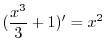
 and
and 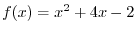 , P is fixed. On the other hand, even P is given, the value of and can not be determined uniquely.
 .
.  ,
,
 . Thus the point P is on the ray
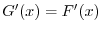 and the distance from the origin is 2. Thus the rectangular coordinate of P can be expressed as
![$\displaystyle{[2,\frac{\pi}{3}]}$](img2230.png) . Note that
. Note that
 and
and  also represents the point P.

![$[1,\frac{\pi}{3}]$](img2233.png) .
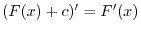
. 
 |
 |
 |
|
 |
|
 |
Polar Equation
Suppose the curve of a function is given by rectangular coordinates
 . Then the equation expressed by the polar coordinates ,
is called Polar Equation.
. Then the equation expressed by the polar coordinates ,
is called Polar Equation.


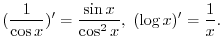 . Then we have
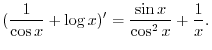 which implies
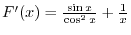 . Then
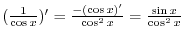
 Simplifying,
 From this,


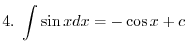 is a even function, we have
 . Thus it is symmetric with respect to the
  -axis. Thus to draw the curve of a function, we only need to check from
 to
to
 .
.
SOLUTION
is even implies
. Thus it's curve is symmetric with respect ot the -axis.

|
Exercise A
|
 and the local extreme values. Describe the concavity of the graph of and find the points of inflection.
 and
and
 , we say
 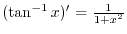 is a vertical cusp?D
|
Exercise B
|
and describe the concavity of the graph of ?D
(a)
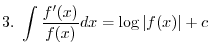 (circle)
(b)
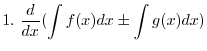 , Archmedes' spiral
(c)
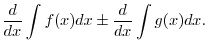 Bernoulli's lemniscate