Next: Higer Order Homogeneous Linear Up: Linear Differential Equations Previous: Solution of Linear Differential 目次 索引
2. Suppose that one of the solutions of
 is
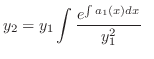
is  ,then the other solution
  by using the reduction of order is given by
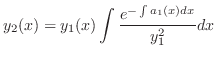
 are linearly independent.
 |
 |
 |
|
 |
|
 |
|
 |
|
 |
|
| 0 | |
 |

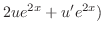
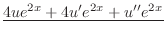
 . Then

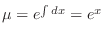 . Multiply
  to both sides of equation, we have
 . Solving this, we have
 and
and
 , we have
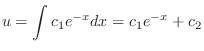
 and we obtain the general solution.

 |
|
 |
|
 |
|
 |
|
 |
|
 |
|
| 0 | |
 |
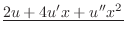
. Then
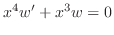

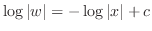 . Thus,
 .
Note that
. Then
.
Note that
. Then
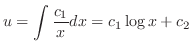
 . Then we have the general solution.

 |
|
 |
|
 |
|
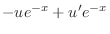 |
|
|
|
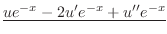 |
|
 |
|
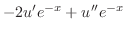 |
 . Then

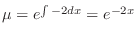 .
Multiply to both sides of equation. Then the left-hand side is the derivative of the product of and
.
Multiply to both sides of equation. Then the left-hand side is the derivative of the product of and  .
.
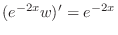
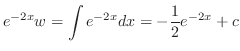
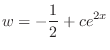 .
.

 . Then we have the general solution.
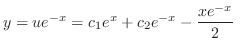
 |
|
 |
|
|
|
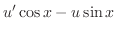 |
|
|
|
 |
|
 |
|
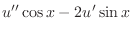 |
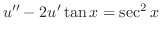 . Then
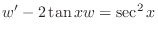
 . We multiply to both sides of equation. Then we get
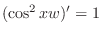 . Solve this equation, we have
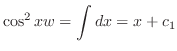
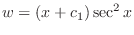 .
.
 |
|
 |
|
|
 |
 . Then we have the general solution.

 |
|
 |
|
 |
|
 |
|
 |
|
 |
|
| 0 | |
 |
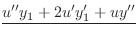
 . Then we have

 to both sides. Then the left-hand side is the derivative of the product of and .
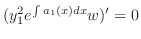
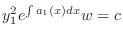
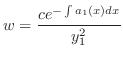 . Then
|
|
 |
|
|
|
 . Then