


Next: Trigonometric Function Up: Functions Previous: Functions Contents Index
Functions
For each variable  in
in
 , there is exactly one
  so that the ordered pair
  is contained in the subset defining rule
  . This rule is called function and denoted by
  .
.
NOTE A variable in  is called an independent variable, The value determined by is called the dependent variable. If is a function of ,
 and
and
 .
.
Domain of The domain of is the set of variables of for which  is also a real.
 for which the denominators are not 0.
SOLUTION To find the domain of  , it is enough to find the set of variables so that
 is also real. Note that for
 , is real.
 imples that
 . Thus,

Using the intervals' notation, we have
 means that can be in any one of the intervals
 ,
,
 ,
,
 . Thus we use
  .
.


SOLUTION 1.
Note that
 is real whenever the denominator is not 0 and
 .
With these conditions, we have
.
With these conditions, we have  . Rewriting to get
  . Using the interval,


2.
 is real whenver the denominator is not 0 and the inside the radical has to be non-negative. With these conditions,
 and
and


Simplifying to get

 and
and
 , we have the denominators 0. Thus these values do not satisfy the inequality. We put circle on the number line. On the other hand,
 satisfies the inequality, we put dot on the number line to indicate this number is included. Now we check the sign
 .
.
Rational Inequality Multiplying both sides of the equation by the square of the denominator, we can get rid of the denominator without changing the inequality sign.

Solving inequality To solve
 , we solve
 . Then we have ,
, and
. Then we have ,
, and
Using the interval, we have

Graph
For a function , the set of points  on the
  -plane is called the graph of a function .
graph

NOTE The graph of the function is one way to express the rule between two sets. To draw a nice graph, one must know about the critical points, concave up, concave down.
Composite Function
For the range of is in the domain of , the correspondense between and  is called the composite function and denoted by
  .
.

NOTE The range of has to be in the domain of . Otherwise, can not be defined.
 ,
,
 . Find
 and
and
 .
is
.
is
 and these are in the domain of . Thus,
 is
is
 , the range of given by
 is not in the domain of . Then, exclude the value of which becomes 0, the range of is in the domain of . So, for
 , we have
 |
 |
 |
|
|
 |
 Solve
Solve
 for , we have
 . Then can not take 1.
.


SOLUTION 1.


Create Composite fct To find , the range of  must be in the domain of . Thus, replace of by , and check the graph of .
By looking at the graph of , for
 , we have
 . Also, for
  or
or  , we have
  . Thus,

 , we obtain
 , for
, for  , we have
 . Also, for
  , we have
 , and for , we have
 . Therefore,

 ,
,
 is said to be one-to-one.
The graph of is intersected with more than two points with the line  . Thus, it is not one-to-one.
The contrapositive of the statement
 is
is
 Thus, once we show that the contrapositive is true whenever the original statement is true, we can use the contrapositive.
A statement is an assertion that can be determined to be true or false. We use
Thus, once we show that the contrapositive is true whenever the original statement is true, we can use the contrapositive.
A statement is an assertion that can be determined to be true or false. We use  for statements. The statement
 becomes false only if
  is true and
  is false.
Contrapositive Truth Table
 The contrapositive of the statement
 is given as
 which is equivalent to
.
which is equivalent to
.


SOLUTION 1. For
 , we have
 . Thus, it is not on-to-one
2. Suppose that
 . Then
 . Multiply
 to the both sides, we have
 . Thus


SOLUTION We show
 .
implies that
.
implies that
 which implies that
 . Now we have show
is the only solutioin. To show this, we write
. Now we have show
is the only solutioin. To show this, we write
 . Then we have
 . This is sums of squres. Thus they are never 0 except
 . This shows that
is the only solution.
. This shows that
is the only solution.
one-to-one To find the given function is one-to-one, it is enough to show
. To show it is not one-to-one, it is enough to give one counter example.
Inverse Function
For a function is one-to-one, the correspondence between each
 and unique such that
  is called the inverse function of and denoted by
  .
.
NOTE The inverse function of is and satisfies
 . Thus we can write
 , we can simply change and and solve for . This way we can find the inverse function of .
Symmetric The inverse function
 and the function is symmetric with respect to the line
  .
.
 . Then
 . Now multiply both sides by
 and simplify the equation to get

 and solve for .

 . Thus
.
. Thus
.
Next we find the inverse . Using
 to obtain
 , we get
 . Then
 and
and
 How to find the inverse
by .
.
How to find the inverse
by .
.

 . Then
 . Clearing denominators, we have
 which implies that
. Thus one-to-one.
We next find the inverse function. Replace by , we get
which implies that
. Thus one-to-one.
We next find the inverse function. Replace by , we get
 which implies that
 . Now take the reciprocal of both sides, we have
 which implies that

 . Thus this is not one-to-one


ExercisesA
when the value of is 1
 and
and
 , draw the graph of the following functions
(a)
, draw the graph of the following functions
(a)
 (b)
(b)
 and
is called even function provided
and
is called even function provided
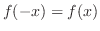 in
in
 . On the other hand if
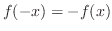 , then the function is called odd function. Determine the following functions are even or odd functions.
ExercisesB
and
(a) A product of even function and odd function
![\includegraphics[width=3.5cm]{SOFTFIG-1/function.eps}](img143.png)
![% latex2html id marker 36998
\includegraphics[width=3.5cm]{SOFTFIG-1/reidai1-1.eps}](img152.png)
![% latex2html id marker 37016
\includegraphics[width=3.5cm]{SOFTFIG-1/enshu1-1.eps}](img158.png)
![\includegraphics[width=3.5cm]{SOFTFIG-1/graph_gr1.eps}](img182.png)
![% latex2html id marker 37170
\includegraphics[width=3.5cm]{SOFTFIG-1/reidai1-2_gr4.eps}](img201.png)
![\includegraphics[width=3.5cm]{SOFTFIG-1/composition-1_gr6.eps}](img207.png)

![\includegraphics[width=3.5cm]{SOFTFIG-1/Comp_gr3.eps}](img208.png)

![% latex2html id marker 37221
\includegraphics[width=3.5cm]{SOFTFIG-1/enshu1-2_gr4.eps}](img210.png)
![\includegraphics[width=3.5cm]{SOFTFIG-1/one-to-one_gr1.eps}](img226.png)
![% latex2html id marker 37416
\includegraphics[width=3.5cm]{SOFTFIG-1/reidai1-4.eps}](img267.png)
![% latex2html id marker 37475
\includegraphics[width=3.5cm]{SOFTFIG-1/enshu1-4-2_gr1.eps}](img282.png)


