Next: Mean-value theorem Up: 微分法(DEFFERENTIATION) Previous: Higher-order derivatives
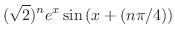
2.3
 |
 |
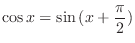 |
|
 |
|
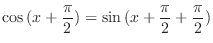 |
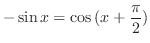
 , this is ture.
Now assume that
, this is ture.
Now assume that
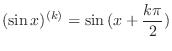
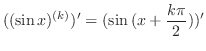
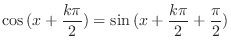
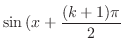
 .
.
 |
|
 |
|
|
 |
||
|
 |
 |
|
 |
|
|
|
 |
, this is true. Now assume that
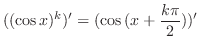
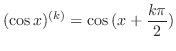 .
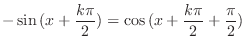
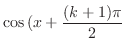
.
 |
|
 |
|
|
 |
||
|
 |
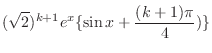
1.(c)
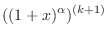
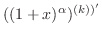
Using the mathematical induction, we prove this. For ,

 .
.
 |
|
 |
|
|
 |
||
|
 |
||
|
 |
2.
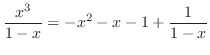 また
また
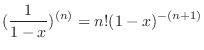 より
より
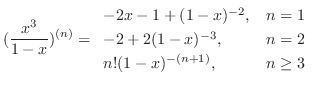
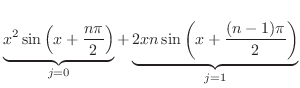
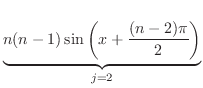
(b) By Leibniz's theorem, we have
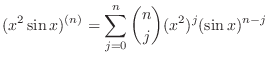
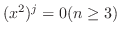 . Then
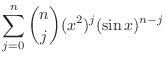 |
|
 |
|
 |
 |
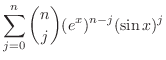
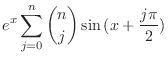
(c) By Leibniz's theorem, we have
 |
|
 |
|
|
 |
 , we can write
 .So, we suppose that
 . Then
 |
|
 |
|
|
 |